
| Ingredient Category | Primary Sleep Benefits | How It Works | Pros & Cons | Ideal User Profile |
| Essential Oils (e.g., Lavender) | Promotes rapid relaxation and eases anxiety for sleep onset. | The scent sends a direct “calm down” signal to your brain’s emotional center. | Pros: Works quickly, natural, pleasant. Cons: Effects vary; scent is personal. | Those with racing thoughts, stress, or who enjoy aromatherapy rituals. |
| Herbal Extracts (e.g., Valerian Root) | Encourages deeper, more sustained sleep and reduces nighttime awakenings. | Helps your brain’s natural “brake pedal” (GABA) work better to slow down activity. | Pros: Supports deep sleep; traditional use. Cons: May take a few nights; distinct odor. | Light sleepers, those seeking a non-habit-forming, herbal-based solution. |
| Melatonin | Regulates the sleep-wake cycle, ideal for jet lag or irregular schedules. | Tells your internal body clock “it’s nighttime,” helping to reset your sleep schedule. | Pros: Highly effective for timing; targets circadian rhythm. Cons: For sleep timing, not quality; not for daily long-term use. | Travelers, shift workers, or anyone with a disrupted sleep schedule. |
| Magnesium & L-Tryptophan | Supports whole-body relaxation and improves sleep continuity from within. | Magnesium relaxes muscles, while L-Tryptophan is a building block for your sleep hormones. | Pros: Addresses physical tension & root causes. Cons: Best with consistent use; not instant. | Individuals with physical tension, or those seeking foundational, nutritional sleep support. |
Safety Alert: The above integridents are typically sugar-free, and non-pill options. Saying that, sleep patch users may also experience side effects like daytime drowsiness or skin irritation.
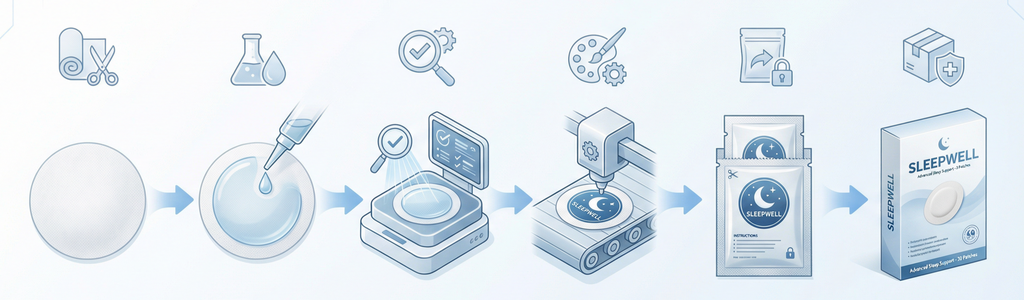
- Consultation & Goal Setting: It begins with a deep dive into your brand vision, target audience (e.g., stressed professionals, menopausal women, frequent travelers), and market differentiators. A good manufacturer will ask more questions than they answer at this stage.
- Formula Customization: You’ll choose from a portfolio of base formulations (e.g., “Deep Relaxation,” “Stress Melt,” “Jet Lag Reset”). This is where private label shines – you can adjust the potency, add a signature essential oil, or create a novel blend from existing, proven components.
- Packaging Design: This is your canvas. You provide the vision for patch design, pouch aesthetics, and box artwork. Your manufacturer’s design team should guide you on technical specs, material sustainability, and print-ready file preparation.
- Prototyping & Sampling: Before full production, you’ll receive physical sleep patch samples for approval. Test the patch’s adhesion, feel, and scent. This is a critical quality check. You must act as a real customer, not a brand owner.
- Production & Quality Assurance: Upon your sign-off, bulk production begins under strict guidelines. Reputable partners will conduct in-process and final batch testing, providing Certificates of Analysis (CoA) for transparency.
- Logistics & Fulfillment: The finished products are shipped to your designated warehouse or directly to a fulfillment partner. Some manufacturers offer drop-shipping services to simplify operations.
- Formula Customization: Taking use of your partner’s expertise in sleep patch, eithor adjust scent profiles, active ingredient concentrations, or blend unique oil combinations.
- Patch Design: Choose the shape (e.g., round, leaf-shaped, custom die-cut), size, and color of the patch itself. For sleep patches for kids, The cartoon design is the secret weapon of sleep patches for kids. Children can sometimes be resistant to using sleep patches for adults. However, if sleep patches are designed with their favorite cartoon characters, they may be much more willing to use them.
- Packaging: Design single-dose pouches (foil or compostable materials), cartons, and shipping displays. This is a major touchpoint for your customer.
- MOQ Flexibility: Competitive manufacturers offer low minimum order quantities to help startups validate the market before scaling.
- Share Knowledge: Don’t just sell a patch; sell a better night’s sleep. Create blog content and videos explaining transdermal delivery and the science of the ingredients. Address common pain points like “morning grogginess” or “pill fatigue.”
- Social Proof: Share user-generated content, testimonials, and influencer reviews focusing on specific usage scenarios – travel, stress, new parents, etc.
- Online Ads: Run ads targeting keywords like “sleep patches for travelers,” “natural anxiety relief,” or “non-habit forming sleep aid.”
- Subscription Models: Sleep is a recurring need. A subscription option ensures customer retention and predictable revenue.
- Highlight the Experience: Emphasize the benefits of a no-mess, long-lasting solution that’s part of a modern sleep hygiene ritual.
- Apply the patch to a clean, dry, hairless area on the inner wrist, ankle, or below the collarbone at least 30 minutes before bed. For essential oil sleep patches, you can also put it anywhere (e.g. pillow) in your bedroom if you don’t want any touch with your skin.
- Press firmly for 10-15 seconds to ensure the stable adhesive bonds properly.
- Keep it for 6-8 hours for the long-lasting effect.
- Upon waking, peel off slowly. The no-residue formula should leave skin clean.
- Discard the used patch. Consider offering guidance on sustainable disposal.